Annuity Lesson #26

The History of Annuities: Tracing Their Evolution in Financial Planning

Jeremiah Konger
CEO
"An annuity may be particularly valuable for women who are concerned about outliving their money."
Annuities are a modern financial tool, but did you know their roots stretch back thousands of years? Even back then, annuities were already an efficient way of creating a steady income for life for soldiers, ministers, and many prominent individuals.
This article takes you on a journey through the history of annuities and explains how they have remained a foundation for financial planning until today.
Ancient Origins and Early Practices
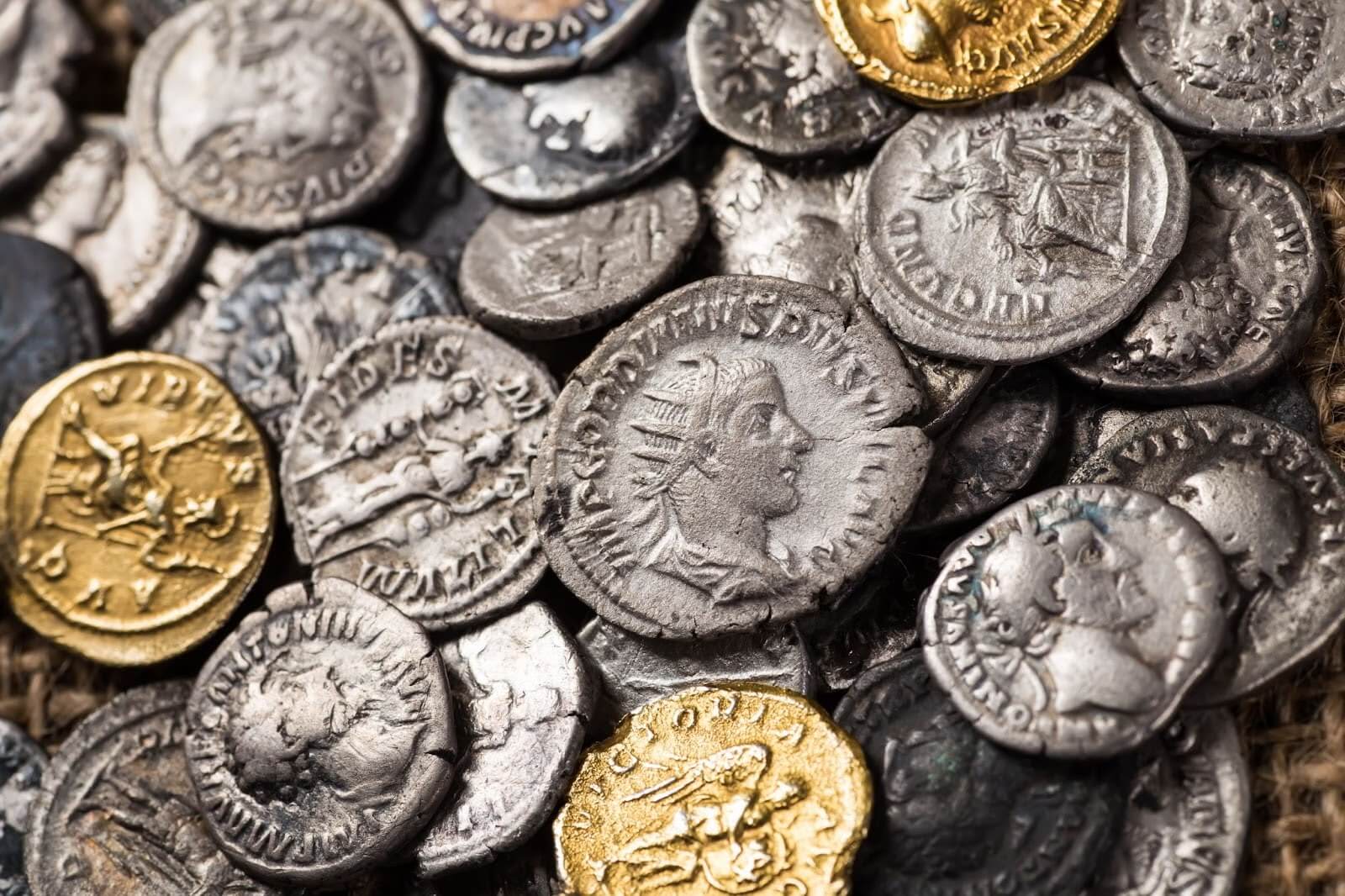
The very first recorded contracts that resemble annuities were found in the Roman Empire over two thousand years ago. The Romans called them “annua,” which, back then, were life-stipends given to citizens in exchange for a one-time lump payment (very much like investors purchase annuities now).
Archeologists also discovered evidence that can link annuity-like contracts to Egypt, dating back as early as 1700–1100 B.C. Egyptians created agreements guaranteeing fixed payments to temples or people. There is even an uncovered legal code that indicates Hep’efa, a prince ruling in Sint in the Middle Empire, purchased an annuity of that time.
The Middle Ages to the Early Modern Period
By the Middle Ages, annuities were widely used across Europe. Governments and religious institutions sold them to raise funds to finance wars, cathedrals, and civil projects.
It was carried out as an annuity pool (tontines) in which individuals purchased a share in exchange for a life annuity. Since multiple people could contribute, each survivor received a large payment, and the last survivor was paid the remaining principal.
Tontines were a kind of lottery because only some participants could receive both security and a hefty payment.
The Rise of Tontines
The tontine was an early financial scheme that was based on pooling money. Participants purchased an annuity, and only the survivors would receive a portion of the principal as other annuitants died.
As you may be wondering, this system wasn’t fair to all participants - hence, its popularity gradually declined.
Actuarial Breakthroughs
Around the same time, in the 18th century, annuities were no longer based on guesswork. Pioneers like Edmond Halley, Abraham de Moivre, and Thomas Simpson introduced mathematical principles that shaped the modern life insurance industry.
The idea was to collect a fixed contribution from members and distribute a certain sum to the beneficiaries of those who passed away each year.
These actuarial advances shifted from lottery-like annuity standards to fair, predictable, and sustainable rules that applied to everyone.
Annuities in America: Growth & Modernization
The popularity of annuities slowly reached the United States in the 18th and 19th centuries, often with religious affiliations. For example, the Presbyterian Church in Pennsylvania created annuity plans for retired ministers.
However, few people saw a need to purchase annuities simply because they could always rely on the support from their extended families. It was mainly lawyers and executors of estates who invested in them to leave income for their beneficiaries.
This all shifted to a different route in the 20th century. Before the Great Depression, annuities made up only a tiny portion of the insurance market, just 1.5% of total life insurance premiums collected in the U.S. between 1866 and 1920. At the time, most families relied on multi-generational households for financial security, leaving little demand for annuity products.
The Great Depression, however, changed everything. As the economy collapsed and uncertainty grew, people began seeking safer, more dependable ways to protect their wealth. Annuities gained traction as a stable alternative, backed by insurance companies that represented security during one of the most volatile financial eras in history.
The Development of Modern Annuity Products
The Pennsylvania Company for Insurance on Lives and Granting Annuities made annuities available to the public in the 20th century. Later, in 1875, the American Express Company established the first corporate pension plan.
Today, anyone can invest a lump sum of money to create additional income for themselves. From the mid-20th century, annuities diversified greatly:
- Fixed annuities offered predictable income.
- Variable annuities (1950s onward) introduced market exposure with potential for higher returns.
- Indexed annuities (1990s) provided returns tied to equity indexes while preserving downside protection.
- Lifetime income ridersallowed retirees to lock in guaranteed payments without fully annuitizing.
Modern consumer protections, including disclosure rules and solvency requirements, grew out of earlier challenges. Annuities remain one of the few financial products that directly transfer longevity risk from individuals to insurers.
Why History Matters for Today’s Annuity Buyer
History shows both the resilience and fragility of annuities. Ancient contracts remind us of their role in providing security. The rise and fall of tontines highlight the risks of poorly designed income products. Advances in actuarial science demonstrate how math and regulation underpin today’s guarantees.
For modern buyers, understanding this history means appreciating why contract terms, insurer strength, and regulatory protections matter. The guarantees that protect your retirement are the product of centuries of innovation, adaptation, and, at times, failure.
Learn More & Compare Today’s Annuities
- Take an Annuity Quiz to find out what annuity product is best suited for you.
- Use our Annuity Calculator to estimate how much income you can create for your retirement.
- Explore our blog to learn more about different types of annuities, annuity riders, and insurers.
FAQs About the History of Annuities
What is the oldest recorded annuity contract?
The earliest examples date back to ancient Egypt, though Roman “annua” stipends are the most documented.
What is a tontine, and why did it decline?
A tontine was an early financial scheme that pooled money among participants and redistributed income to survivors. It declined due to misuse, moral criticism, and regulatory changes.
When did annuities become a common retirement tool in the U.S.?
Annuities gained traction in the 19th century but became mainstream during the Great Depression, when Americans sought guaranteed income amid economic uncertainty.
Who were the key figures in shaping modern annuities?
Mathematicians like Edmond Halley, Abraham de Moivre, and Thomas Simpson introduced mortality tables and actuarial science in the 18th century. These pioneers laid the foundation for modern annuity and life insurance practices.
Why did annuities grow rapidly in the 20th century?
Their popularity surged during the Great Depression, as people turned to insurance companies for stability and guaranteed income when traditional investments felt too risky.

Annuity Expert
Jeremiah Konger
PS - Here's 3 ways we can help you learn more about annuities.
1. Watch Videos on How to Identify The Highest Paying Protected Income & Growth Annuities.
2. Watch Videos That Reveal What to Look For When Buying A Protected Growth Annuity.
3. Click Here To Access Our Annuity Review Vault To Compare The Pro's and Con's of Dozens of Annuities.
Annuity Association is the leader in providing Independent Annuity recommendations for protected income, safe growth and other benefits in retirement.
-
Serving All 50 States
-
-
Annuity Association
759 SW Federal Hwy Ste 200H
Stuart, FL 34994


© Copyrights 2025 by Annuity Association. All Rights Reseved.